
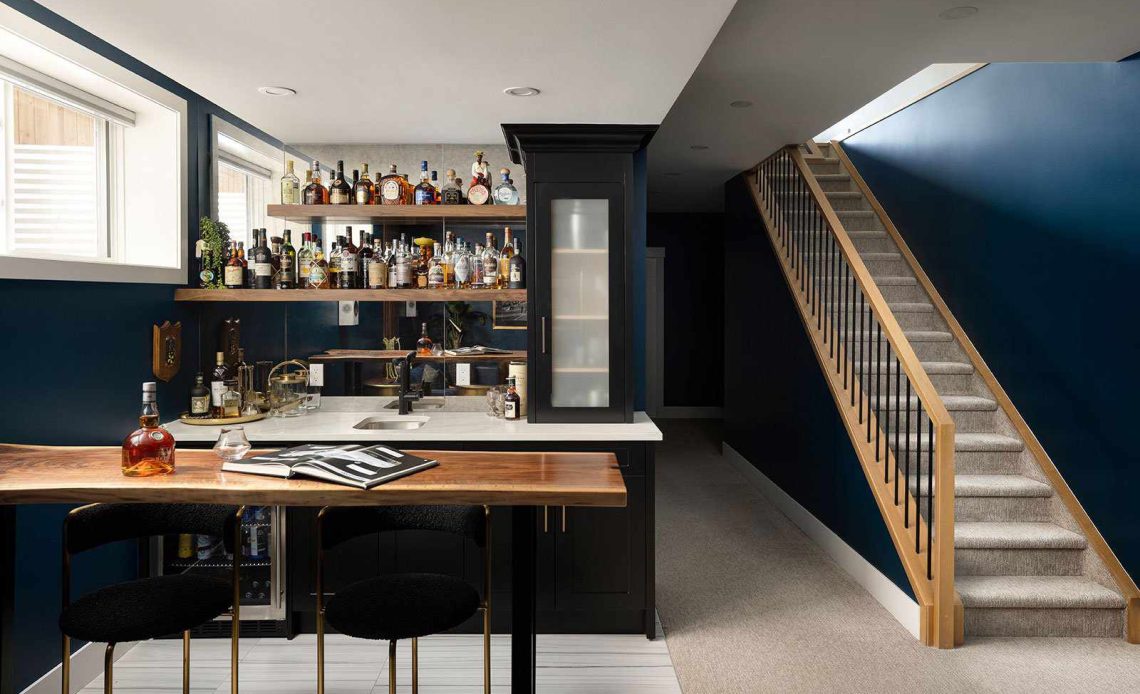
A DIY Basement Bar is a home upgrade that is more achievable than most realize. You don’t necessarily need a full plumbing hookup to make it work. Many 2026 home trends focus on “dry bars” using modular cabinetry, peel-and-stick backsplashes, and plug-in wine fridges. With a clear plan and a few weekends, you can create a high-end social hub on a modest budget.
This guide covers everything – from planning and layout to materials, budget, and design style – so you walk away with a clear picture of what building your own basement bar actually looks like.
First Decision: Wet Bar or Dry Bar?
This is the most important question before anything else. A wet bar includes a sink and plumbing. A dry bar doesn’t. Both have their place depending on your basement setup and budget.
| Feature | Wet Bar | Dry Bar |
|---|---|---|
| Plumbing required | Yes – needs drain + supply lines | No |
| Cost | $2,000-$8,000+ depending on complexity | $500-$3,000 |
| Best for | Frequent entertaining, basement with plumbing nearby | Casual use, budget builds |
| Permit needed | Usually yes (check local codes) | Typically no |
| Resale value | Higher | Moderate |
Planning Your Space
Before buying a single piece of wood, spend time on your layout. The most functional basement bars follow a simple principle: keep everything within arm’s reach behind the bar, and leave enough room for guests in front.
- Aim for at least 6-8 feet of bar length for a comfortable setup
- Leave 36-42 inches between the back bar and the front of the counter for the bartender to move
- Plan for at least 24 inches of bar stool space per seat
- Check ceiling height – pendant lighting needs at least 7 feet clearance
Must-Have Elements
Every good basement bar needs these core components – skip one and the whole thing feels incomplete:
- Bar counter – the centerpiece, ideally 42 inches high (bar height)
- Back bar shelving – for bottles, glasses, and the visual wow factor
- Mini fridge or bar fridge – non-negotiable for cold drinks
- Proper lighting – pendant lights over the bar, under-cabinet LED strips
- Seating – bar stools matched to counter height
- Sink (if wet bar) – even a small one makes cleanup much easier
Step-by-Step Build Guide
- Measure and map your space – sketch the layout on graph paper or use a free app like RoomSketcher
- Frame the bar structure using 2×4 lumber – build the base frame, then the counter frame on top
- Add drywall or beadboard panelling to the front face of the bar
- Install your countertop – butcher block, laminate, or concrete all work well
- Build or install back bar shelving – floating shelves are budget-friendly and look great
- Run electrical if needed (hire a licensed electrician for this part)
- Install lighting – pendants above, LED strips below cabinets
- Add your mini fridge and any sink plumbing
- Paint, stain, or tile to finish the look
- Stock it, style it, and enjoy
Budget Breakdown
| Item | DIY Cost (Approx.) | Hired Out (Approx.) |
|---|---|---|
| Lumber + framing | $150-$300 | $400-$700 |
| Countertop (butcher block) | $200-$500 | $600-$1,200 |
| Back bar shelving | $80-$200 | $300-$600 |
| Mini fridge | $150-$400 | Same (you supply) |
| Lighting | $100-$300 | $200-$500 |
| Sink + plumbing (wet bar) | $300-$600 | $800-$2,000 |
| Paint + finishing | $50-$150 | $200-$500 |
| TOTAL (dry bar) | $730-$1,850 | $1,700-$3,500 |
| TOTAL (wet bar) | $1,030-$2,450 | $3,500-$7,000+ |
Design Styles to Consider
Your bar should feel like an extension of your personality. Here are three popular directions:
Rustic / Industrial: Reclaimed wood countertops, exposed brick, Edison bulb lighting, metal bar stools. Warm and unpretentious – great for a sports bar vibe.
Modern / Sleek: High-gloss cabinets, quartz countertop, recessed lighting, backlit floating shelves. More work to build but stunning when done right.
Classic Home Bar: Dark wood panelling, leather stools, pendant lights, built-in wine rack. Timeless and elegant – works especially well in finished basements.
A Few Practical Things People Often Forget
- Ventilation – a basement bar generates heat and odour; make sure there’s airflow
- Check if you need a permit – most localities require one for plumbing work
- Waterproof the floor area near the sink before building on top of it
- Install a GFCI outlet near any water source – it’s code in most places and just smart
The most important thing? Start. A lot of people get stuck in the planning phase forever. Sketch a layout, figure out your wet vs. dry bar decision, set a budget, and start with the frame. The rest follows naturally.