
Keeping Your Team Cool Without the Guesswork
Picking a cooling system for an office isn’t quite like choosing an aircon for your bedroom. You’re dealing with bigger spaces, more people, longer operating hours and often a landlord’s rules about what can go where. The choice also shapes your electricity bills and maintenance routine for years to come. Options range from simple split units to central chilled-water plants, with VRF cooling for commercial spaces sitting somewhere in between. You may also come across the term VRV system for commercial buildings in quotes, which refers to the same core idea. Here’s how to weigh up your options before committing.
Comparing the Main Options
Most offices choose between three broad types of systems. Each has a place, and VRF cooling for commercial spaces is often considered for mid-sized offices as it balances flexibility and efficiency:
| System | Typical Setting | Strengths | Trade-offs |
| Split or multi-split | Small offices, shophouses and single-floor units | Lower upfront cost and simple to install | Each outdoor unit serves only a few rooms, so ledge space fills quickly |
| VRF / VRV | Mid-sized offices and floors with many rooms | Zones can be controlled separately, and output adjusts to demand | Higher upfront cost and needs trained technicians for servicing |
| Chilled water | Large buildings and high-rise towers | Handles big, steady cooling loads across many floors | Requires a plant room and is usually managed at building level |
The Quick Cooling Rundown
- Split units suit small offices, while chilled water fits large towers.
- VRF and VRV systems work on the same core variable-refrigerant idea.
- Zoning lets empty rooms stay idle while busy areas get more cooling.
- Building rules may limit where outdoor units and piping can go.
- A proper load calculation helps avoid oversized or undersized systems.
How Variable Refrigerant Systems Work
In a VRF setup, one outdoor unit – or a small group of them – connects to many indoor units through refrigerant piping. Variable-speed compressors ramp up or down depending on how much cooling each zone needs at that moment, rather than switching fully on and off. So an empty meeting room can sit idle while a packed open-plan area gets more cooling.
You’ll often hear the two terms used interchangeably. VRV started as a trademarked name for this technology, so a VRV system for commercial buildings and a VRF one generally work on the same principle. The bigger differences usually come down to the specific model, its controls and how well the installation is planned.
Questions to Ask Before You Commit
Before signing off on a quote, get answers to a few practical questions. Whether you’re leaning towards a split setup or VRF cooling for commercial spaces, run through these with your contractor:
- How will the office be zoned? Areas like server rooms, pantries and meeting rooms may need separate temperature control.
- What are your usual operating hours? If some teams work late or on weekends, a system that cools individual zones avoids running the whole floor.
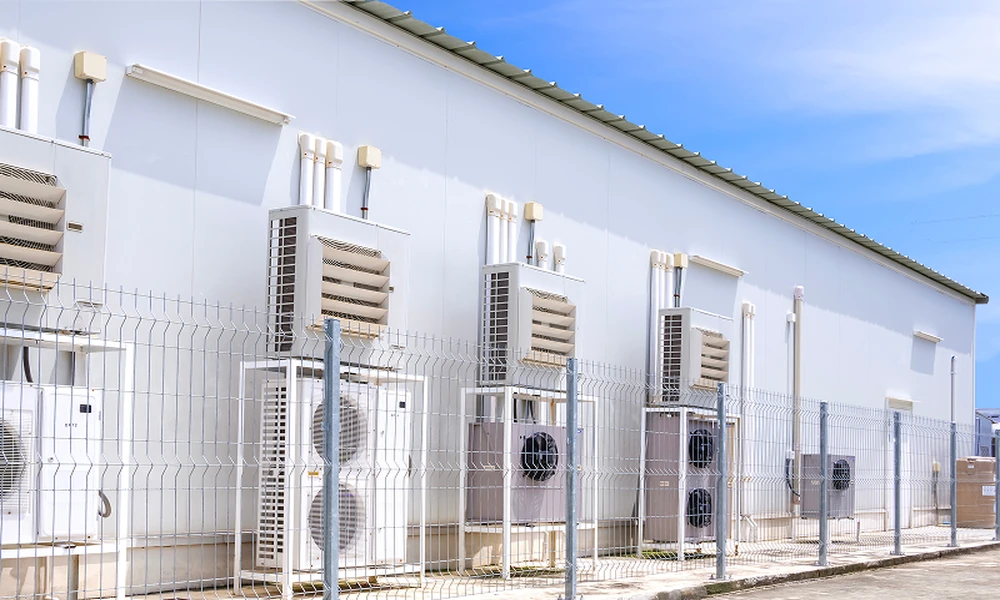
- Where will outdoor units and piping go? Building management may set rules on ledge space, piping routes and noise levels.
- What does ongoing maintenance involve? Ask how often servicing is recommended and how easily parts can be sourced.
Looking Beyond the Upfront Price
It’s tempting to compare quotes on installation cost alone, but running costs over the system’s lifespan can matter more. A system that’s too large for your space may cycle inefficiently, while one that’s too small can run flat out on the hottest afternoons. A proper load calculation, covering floor area, headcount, equipment and sun exposure, helps get the sizing right.
Energy efficiency ratings, warranty terms and expected lifespan are worth comparing side by side too. If you plan to expand or reconfigure the office later, a VRV system for commercial buildings can often take on extra indoor units, within the limits of the outdoor unit’s capacity.
Settling on a System That Grows With You
There’s no single cooling system that suits every office. The right choice depends on your floor size, how the space is used, its daily hours and what your building allows. A small team in a shophouse unit may be well served by a few split units, while a busy floor with many meeting rooms could benefit from zoned control.
Start with a site survey so the recommendations are based on your actual layout rather than estimates. Collect a couple of proposals and compare them on running costs, maintenance needs and flexibility, not just the installation figure. Thinking a few years ahead, especially if headcount may change, helps you avoid an early replacement.
Contact Newway Air Conditioning to arrange a site assessment and talk through cooling options for your office.