
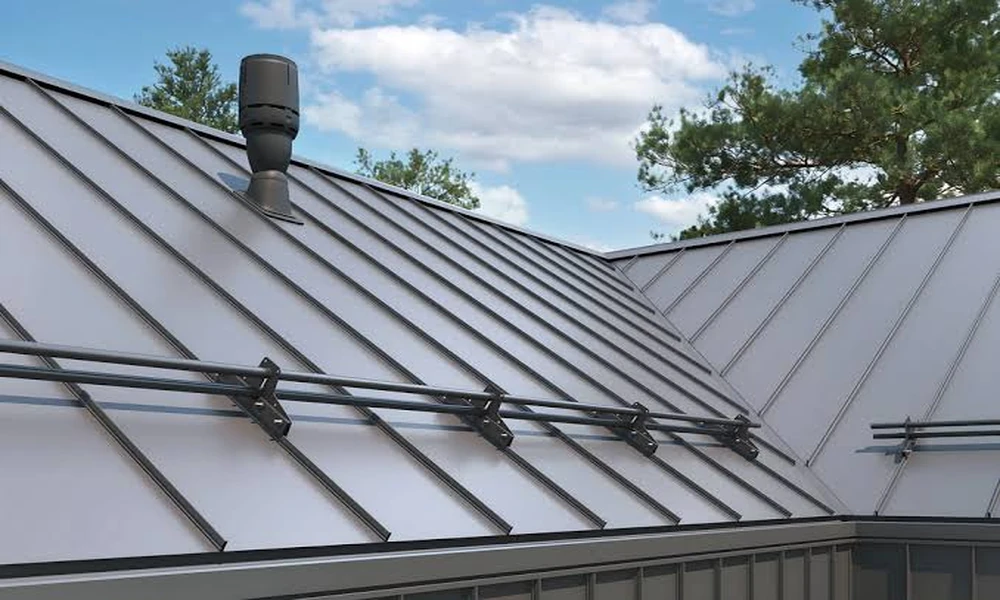
A standing seam roof often shows up at a house as a flat coil of steel on a trailer. A roll former sits in the driveway, the coil feeds through it, and long panels come out the other end already shaped and cut to the exact length of the slope. By the end of the job that coil has become the most visible surface of the home. Between the trailer and the ridge, though, dozens of small decisions get made, and they are the reason two metal roofs that look identical from the street can age very differently.
For homeowners around Lake Marble Falls and the Highland Lakes, a useful place to see these choices in practice is a contractor that installs Marble Falls standing seam metal on both new builds and reroofs. Ridgely Roofing is locally owned, offers free estimates and a discount for military families, and its team brings 34 years of experience to every job. The company also works on shingle and composition roofs, fences and K style gutters, and helps sort out the paperwork when insurance is covering part of a project.
What follows moves from the smallest detail on a standing seam roof to the biggest.
Thin Lines That Hide a Wavy Panel
Look closely at many standing seam panels and you will see faint lines pressed into the flat area between the seams. These are striations, sometimes called pencil ribs. They are there to manage oil canning, the gentle waviness that can appear across a wide flat sheet of metal when it heats, cools and flexes.
Oil canning is cosmetic. It does not cause leaks and most manufacturers do not treat it as a defect. Still, on a south facing slope in afternoon light it can make a brand new roof look rumpled. Striations, narrower panels and a flat, true deck all help keep the surface crisp.
The Clip Nobody Sees
Under every seam sits a row of clips that hold the panel down. They come in two broad kinds.
Fixed clips lock the panel in place. Floating clips let it slide a little as it expands in July and contracts on a cold January morning. Long runs of metal, like a ranch house with a deep roof or a single slope that runs thirty feet or more, need room to move, or the stress ends up at the ridge, the eave or the clips themselves. Some lower cost panels skip clips entirely and use a nailing flange with slotted holes along one edge, which works on shorter panels but gives up some of that freedom of movement.
Snapped or Seamed
The seam itself is where most of the engineering lives. There are three common ways to close it.
- Snap lock seams. The panels click together by hand. They are fast to install and work well on typical residential pitches, usually 3 in 12 or steeper.
- Single lock mechanical seams. A seaming tool folds the top of the joint over 90 degrees, giving more holding power against wind.
- Double lock mechanical seams. The tool folds the joint a full 180 degrees. This is the most watertight and wind resistant option and the one usually chosen for low slope porches and additions where water moves slowly.
Seam height matters too. Most residential panels use a 1 inch or 1.5 inch seam, while a 2 inch seam lifts the joint further above running water and reads as a bolder line from the street.
Width and Thickness Working Together
Panel width usually lands somewhere between 12 and 18 inches. Narrower panels look more traditional, resist oil canning better and hold up well in wind. Wider panels cover the roof faster and cost a little less, but show more flex.
Thickness is measured in gauge, and the lower the number the heavier the steel. Residential standing seam is most often 24 or 26 gauge. The heavier 24 gauge panel resists dents from hail and foot traffic better, which matters in a part of Texas where spring storms can drop ice the size of golf balls.
Steel, Coating and Color
Most standing seam in Central Texas is built from Galvalume, a steel sheet coated in an aluminum and zinc alloy that resists rust. Its bare silver finish suits Hill Country farmhouse designs.
Painted panels add another layer. PVDF paint systems, often sold under the Kynar 500 name, hold their color and resist chalking far longer under intense sun than the silicone modified polyester (SMP) paints used on cheaper panels. Lighter colors and reflective cool pigments also bounce more sunlight away, which can take real heat off an attic during a long August.
What Lies Beneath the Metal
The layer under the panels does more work than its price suggests. A high temperature synthetic underlayment handles the heat that builds up beneath dark metal without breaking down the way old felt paper did. Some installers add a slip sheet so the panel can slide freely over it. The deck below needs to be flat and solid, since every dip in the plywood can telegraph through as waviness on the finished roof.
Edges, Ridges and Where the Water Goes
Trim is where a standing seam roof proves the quality of the crew. Hemmed panel ends that hook onto an eave cleat, closures that seal the ribs at the ridge, and a vented ridge that lets attic heat escape all separate a tidy roof from one that whistles in the wind or lets wasps move in.
Rain leaves metal fast. On a long eave, a 6 inch gutter often handles that rush better than a 5 inch one, and downspouts need to be sized for a heavy Hill Country cloudburst rather than a gentle shower.
That fast, clean runoff is also why so many rural homes in this region collect it. The Texas Water Development Board’s Texas Manual on Rainwater Harvesting treats metal as a favored collection surface, and a smooth standing seam roof without exposed screws or granules sends cleaner water toward a tank. As a rough rule, every inch of rain on 1,000 square feet of roof yields around 600 gallons, which adds up quickly on a large ranch home.
The Biggest Choice Is the Roof Itself
Above all of these details sits the question of the roof’s shape and future. Simple gable roofs with long uninterrupted slopes are where standing seam looks and performs its best. Complex roofs with many valleys, dormers and chimneys can still be done well, but every interruption adds flashing work and cost.
Future plans belong in the conversation as well. Solar panels can mount to standing seam with clamps that grip the seams, leaving the steel itself untouched. Metal roofs installed over the right underlayment can also earn a Class A fire rating, a real consideration on wooded lots where cedar and oak sit close to the house.
None of these choices is dramatic on its own. A pencil line, a clip, a fold of steel, a coat of paint. Taken together they decide whether a standing seam roof is something a family forgets about for decades or something they keep calling someone back to look at.